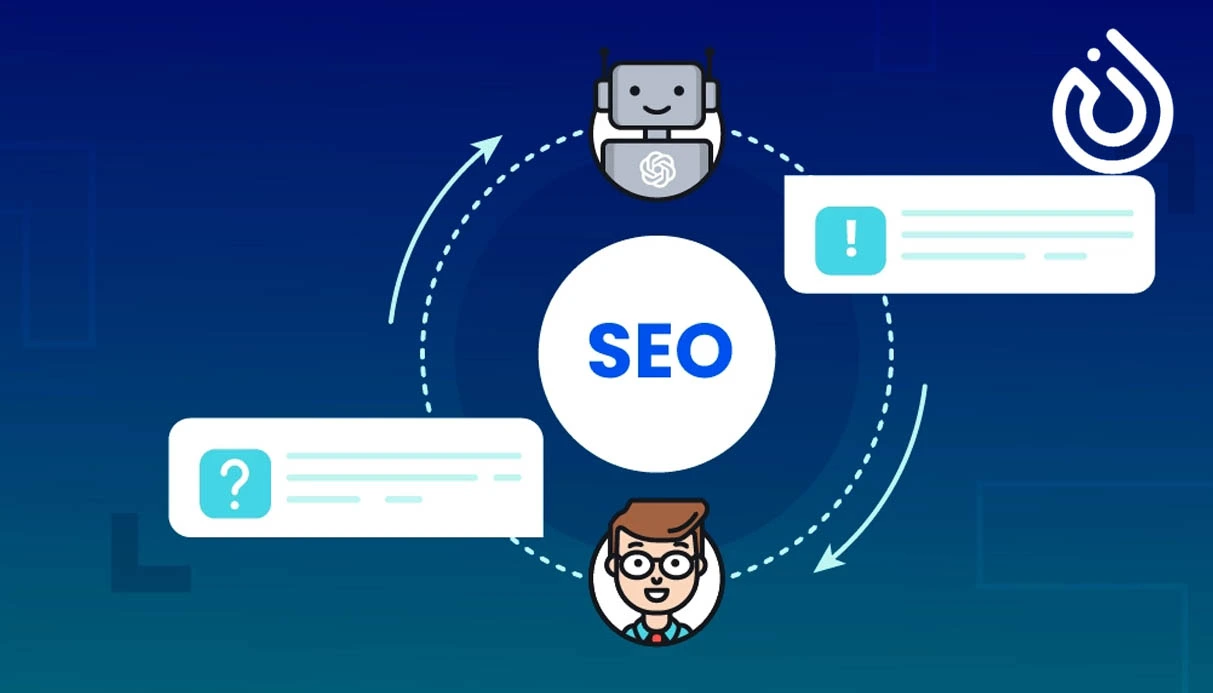
Artificial intelligence has transformed many digital marketing processes in a relatively short period. Among the available AI tools, ChatGPT has become one of the most widely recognized solutions for content specialists, SEO professionals, marketing managers, and online business owners. However, many users still limit the application of ChatGPT in SEO to writing blog posts, rewriting existing text, or producing sponsored articles.
Content creation is only one of the many capabilities of this tool. An experienced SEO specialist can use ChatGPT to analyze data, understand user search intent, design topic clusters, create content briefs, develop internal linking strategies, generate schema markup, categorize keywords, analyze competitors, and even simplify complicated SEO reports.
ChatGPT provides the greatest value when it is used as an analytical assistant alongside human expertise and professional SEO tools. It cannot replace Google Search Console, Google Analytics, Ahrefs, Semrush, Screaming Frog, or manual analysis of Google search results. However, it can significantly reduce the time spent on repetitive tasks and help SEO teams make decisions faster.
In this guide, you will learn about the most important strategies for using ChatGPT in SEO and digital marketing. You will also discover how to use this AI assistant to improve website performance, enhance content quality, and manage SEO projects more efficiently.
Why Should You Use ChatGPT for SEO?
SEO involves a large amount of research, analysis, organization, and content production. An SEO specialist must research keywords, analyze competitor pages, identify technical problems, develop a content structure, and prepare reports for management, content, or development teams.
Many of these activities are repetitive and time-consuming. ChatGPT can process raw information and convert it into a more organized, understandable, and actionable format. For example, you can provide the model with a list of hundreds of keywords and ask it to group them by topic, search intent, audience type, or stage of the sales funnel.
The main benefits of using ChatGPT in SEO include:
- Reducing the time required for repetitive activities
- Accelerating research and brainstorming
- Organizing scattered information
- Supporting content strategy development
- Creating initial structures for pages and articles
- Quickly analyzing competitor information
- Improving communication between SEO, content, and technical teams
- Converting complex data into clear reports
- Discovering new content opportunities
- Producing initial drafts for technical SEO tasks
The quality of ChatGPT’s output depends heavily on the quality of the information you provide. The more detailed your prompt and the more reliable your input data, the more useful the response is likely to be.
Keyword Research with ChatGPT
Keyword research is one of the most important stages of every SEO project. It helps determine what users are searching for, what they want to achieve, and which pages should be created to improve organic rankings.
ChatGPT does not automatically have access to reliable real-time data about search volume, keyword difficulty, click-through rate, or advertising costs. Therefore, it should not be considered a replacement for professional keyword research tools. However, it is highly useful for brainstorming, expanding a topic, organizing keywords, and identifying possible search phrases.
For example, suppose the main topic of your website is “buy WordPress hosting.” You can ask ChatGPT to suggest related long-tail keywords. The output may include phrases such as:
- Best WordPress hosting for an online store
- Is local or international WordPress hosting better?
- Difference between WordPress hosting and Linux hosting
- Best hosting service for WooCommerce
- WordPress hosting for high-traffic websites
- How to choose WordPress hosting
- Professional WordPress hosting prices
- WordPress hosting with high storage capacity
After receiving these suggestions, you should validate them using tools such as Google Keyword Planner, Ahrefs, Semrush, or Google Search Console. Some suggested phrases may have very little search demand or may not support your commercial objectives.
How ChatGPT Can Help with Keyword Research
ChatGPT can support keyword research by:
- Suggesting long-tail keywords
- Generating question-based search phrases
- Identifying subtopics
- Categorizing keywords by product or service
- Separating informational and commercial keywords
- Suggesting synonyms and related phrases
- Creating an initial website page structure
- Identifying potential audience questions
- Grouping keywords by customer journey stage
A useful prompt could be:
“Suggest 50 keywords related to buying WordPress hosting. Categorize them into informational, comparison, commercial, and transactional groups. Also recommend the most suitable page type for each keyword.”
Analyzing User Search Intent
Search intent describes the reason behind a user’s search query. Understanding this intent is essential because even a well-written page may fail to rank if it does not match what users actually want.
Search intent is commonly divided into four primary categories.
- Informational Intent
The user wants to learn something or find an answer to a question. Queries such as “What is SEO?” or “How can I improve website speed?” usually have informational intent.
- Commercial Intent
The user wants to compare available options before making a purchase. Queries such as “best SEO tools” or “Ahrefs vs. Semrush” are examples of commercial investigation.
- Transactional Intent
The user is prepared to take an action such as purchasing, registering, downloading, or subscribing. Queries such as “buy WordPress hosting” or “register for an SEO course” have transactional intent.
- Navigational Intent
The user wants to reach a particular website, brand, or page. Examples include “Google Search Console login” and “ChatGPT website.”
To analyze search intent, you can give ChatGPT a keyword list and ask it to classify each term. Nevertheless, you should compare the result with the actual Google search results page because the SERP is generally the most reliable indicator of user intent.
Analyzing Google Results and Competitors
Competitor analysis is an essential SEO activity. The purpose is not to copy competing content but to understand successful patterns, identify weaknesses, and discover opportunities that competitors have missed.
Start by reviewing the top five to ten Google results for your target keyword. Extract information such as:
- Page title
- SEO title tag
- Meta description
- H1, H2, and H3 structure
- Approximate word count
- Content type and format
- Tables and images
- Frequently asked questions
- Important entities
- Main and secondary topics
- Commercial offers
- Publication or update date
- Content strengths and weaknesses
You can then provide this information to ChatGPT and ask it to identify common patterns. The model can highlight which topics appear on most competing pages and which areas have received less attention.
For example, suppose your target keyword is “best laptop for programming.” Most competitors may focus on the processor, RAM, storage, graphics card, battery life, and display quality. Based on this information, ChatGPT may recommend additional sections such as:
- Best laptops for mobile app development
- Best laptops for backend programming
- Choosing a laptop based on programming language
- Best options for programming students
- Recommended models for different budgets
- Different needs of beginner and professional developers
- Common mistakes when buying a programming laptop
The importance of portability and weight
This approach helps you create content that does more than repeat existing results. It allows you to address a wider range of user needs and provide a more complete answer.
Identifying Content Gaps with ChatGPT
A content gap is an important topic, question, or need that has not been covered adequately on your website or on competing pages.
To identify content gaps, provide ChatGPT with the structures of your own pages and your competitors’ pages. Ask it to compare common topics, weak sections, missing details, and unanswered questions.
For example, all competitors may discuss the advantages and disadvantages of a product, while none of them provide useful information about additional costs, usage requirements, limitations, or real customer experiences. These missing areas may create an opportunity to make your content more useful and distinctive.
A suitable prompt could be:
“Analyze the content structures of these competitor pages. Identify common topics, repetitive sections, weaknesses, and subjects that have not been covered. Then create a recommended outline that is more complete than the existing competitor content.”
The results should still be reviewed by a professional because ChatGPT may not fully understand your target market, commercial priorities, or the quality of each competitor page.
Designing Topic Clusters and Topic Maps
A topic cluster is one of the most effective methods for creating an organized content structure and building topical authority. In this model, a central pillar page is connected to multiple specialized supporting pages.
For example, if your central topic is “digital marketing,” the main page may connect to clusters such as:
- Search engine optimization
- Content marketing
- Pay-per-click advertising
- Social media marketing
- Email marketing
- Sales funnel design
- Marketing data analysis
Each cluster can also have its own subtopics. The SEO cluster, for example, may contain keyword research, internal linking, technical SEO, off-page SEO, local SEO, and competitor analysis.
ChatGPT can receive a broad topic and create a multi-level topic map. You can also ask the model to determine:
- The appropriate page type
- The objective of each page
- The recommended primary keyword
- Supporting keywords
- The relationship between pages
- Internal linking opportunities
- The best publication sequence
The final topic map should be aligned with real search data, your business goals, existing pages, and the resources available to your content team.
Creating an SEO Content Brief
A content brief helps writers understand who the content is for, what it must achieve, and how it should be structured. Without a clear brief, articles often become unfocused, repetitive, or inconsistent with search intent.
ChatGPT can create an initial content brief based on the information you provide.
Information Needed for a Strong Brief
To receive a more useful result, include:
- Primary keyword
- Secondary keywords
- Page objective
- Target audience
- Sales funnel stage
- Search intent
- Content type
- Competitor page data
- Brand voice
- Related products or services
- Writing limitations
- Reliable sources
- Approximate word count
The output may contain:
- Recommended title
- H1, H2, and H3 structure
- Objective of each section
- Secondary keywords
- Frequently asked questions
- Important entities
- Suggested tables
- Recommended images or charts
- Internal linking suggestions
- Call-to-action recommendations
- Tone and writing guidelines
An example prompt could be:
“Create an SEO content brief for the keyword ‘buy travel insurance.’ The target audience consists of people planning an international trip. The objective is to attract users who are ready to purchase. Secondary keywords include travel insurance price, travel insurance coverage, online travel insurance, and insurance company comparison. Provide an H1, H2, and H3 structure, FAQs, recommended tables, important entities, and internal linking suggestions.”
ChatGPT can accelerate the briefing process, but the final document should be reviewed and completed by an SEO or content specialist.
Producing High-Quality Content with ChatGPT
A common mistake is to give ChatGPT only one keyword and ask it to write an entire article. This approach often produces generic, predictable, and shallow content with little original value.
To generate better content, you should provide more detailed and exclusive information. This may include:
- Customer experiences
- Internal company data
- Expert opinions
- Research findings
- Product details
- Brand tone
- Trusted sources
- Unique examples
- Real limitations and advantages
- Business-specific insights
ChatGPT is particularly useful for:
- Suggesting several introductions
- Designing an article structure
- Simplifying technical concepts
- Rewriting complicated paragraphs
- Turning notes into coherent text
- Providing practical examples
- Drafting frequently asked questions
- Creating comparison tables
- Suggesting stronger headings
- Summarizing reports
- Writing multiple meta descriptions
- Adjusting the tone
- Expanding or shortening content sections
The final output should always be reviewed by a writer or subject-matter expert. Product names, prices, statistics, laws, quotations, and important claims must be verified before publication.
The goal should not be to publish AI-generated text as quickly as possible. The objective should be to use AI to support the production of useful, accurate, clear, and original content.
Optimizing Old Content
Many websites have hundreds of old articles containing outdated information or sections that no longer match current search intent. Updating these pages may be faster and more cost-effective than creating new content.
To use ChatGPT for content updates, provide the model with:
- The existing article
- Google Search Console data
- Current ranking keywords
- Competitor information
- Updated product or service information
- User questions
- Conversion data when available
Ask ChatGPT to identify:
- Outdated or repetitive sections
- New topics that should be added
- Unanswered questions
- Weak headings
- Long or confusing paragraphs
- Internal linking opportunities
- Unused keywords
- Ways to improve the introduction and conclusion
- Sections suitable for tables or lists
- New FAQ opportunities
Do not replace the entire article automatically. Changes should be made carefully to protect existing rankings, improve the user experience, and provide more complete information.
It is also important to compare performance before and after the update. Monitor rankings, impressions, clicks, engagement, and conversions to determine whether the changes were effective.
Smart Internal Linking
Internal links help search engines understand the relationship between pages. They also guide visitors toward useful related content and create a clearer navigation path.
If you provide ChatGPT with a list of URLs, page titles, and topics, it can suggest internal linking opportunities.
Important applications include:
- Identifying parent and child pages
- Connecting articles within a topic cluster
- Suggesting links from old content to new pages
- Finding orphan pages
- Recommending natural anchor text
- Reducing excessive use of identical anchor text
- Creating logical user journeys
- Linking informational content to commercial pages
- Strengthening strategically important pages
For better results, you may provide data exported from Screaming Frog or another website crawler. Remove confidential or unnecessary information before uploading any files.
ChatGPT’s recommendations should be reviewed manually. It may suggest technically relevant links that are not commercially useful or contextually natural.
Generating SEO Titles and Meta Descriptions
Writing unique title tags and meta descriptions for a large number of pages can take a considerable amount of time. ChatGPT can produce several versions based on the keyword, page type, brand tone, and user intent.
For example, you can ask the model to:
- Use the primary keyword naturally
- Create an attractive but non-clickbait title
- Avoid producing similar titles
- Highlight the main product benefit
- Match the meta description to search intent
- Provide several versions for testing
- Include a clear value proposition
- Add an appropriate call to action
Google does not always display the title tag and meta description written by the website owner. It may select another section of the page if it believes that text is more relevant to the search query.
Therefore, the main focus should be on clearly communicating the page topic and value rather than following a rigid character limit. Each title should accurately represent the content and avoid misleading claims.
Creating FAQs and Answering User Questions
A frequently asked questions section can reduce uncertainty and improve the overall user experience. ChatGPT is useful for creating an initial list of questions, especially when it receives real customer data.
Good sources for discovering actual user questions include:
- Google Search Console queries
- People Also Ask results
- Customer support messages
- User comments
- Social media discussions
- Industry forums
- Sales conversations
- Questions asked before purchase
- Product reviews
- Customer emails
After collecting the questions, ask ChatGPT to:
- Combine similar questions
- Categorize them by customer journey stage
- Rewrite them in natural language
- Create short and direct answers
- Separate informational and purchase-related questions
- Identify questions suitable for a product page
The answers should be accurate, transparent, and consistent with the company’s actual services. Medical, legal, and financial answers should be reviewed by qualified professionals.
Creating and Reviewing Schema Markup
Structured data helps search engines understand the type and components of a page. ChatGPT can produce initial JSON-LD drafts for different schema types.
Common examples include:
- Article
- Product
- Organization
- LocalBusiness
- BreadcrumbList
- FAQPage
- HowTo
- Event
- Person
- WebSite
To generate accurate schema markup, provide real page information such as the business name, author, publication date, product price, availability, URL, and visible page content.
After receiving the code, validate it with appropriate structured data testing tools. ChatGPT may create technically incorrect properties or include information that is not eligible for a particular schema type.
Adding schema markup does not guarantee a rich result. You should also avoid including information in structured data that is not visible to users on the page.
Using ChatGPT for Technical SEO
ChatGPT cannot replace a developer or professional technical SEO tools, but it can support analysis, documentation, and problem-solving.
Important technical SEO applications include:
- Generating regular expressions for Search Console
- Analyzing URL patterns
- Reviewing an initial robots.txt file
- Suggesting a sitemap.xml structure
- Drafting schema markup
- Reviewing heading hierarchy
- Preparing a redirect map
- Suggesting a canonical strategy
- Categorizing crawl errors
- Analyzing Screaming Frog exports
- Identifying broken-link patterns
- Creating a Core Web Vitals checklist
- Simplifying technical reports
- Performing initial server log analysis
- Explaining indexing errors
For example, you can provide a list of old and new URLs and ask the model to create an initial redirect map. However, the mapping should be reviewed manually, especially during a website migration.
Technical recommendations should be tested in a safe environment before being implemented on a live website. An incorrect robots.txt rule, canonical tag, or redirect configuration can create serious indexing problems.
Creating Regex for Google Search Console
Regular expressions, or Regex, help SEO specialists filter Search Console data more precisely. For example, they can isolate queries containing question words, a brand name, a product category, or a specific URL pattern.
ChatGPT can generate a Regex pattern based on your instructions.
A sample request could be:
“Create a Regex for Google Search Console that identifies Persian queries containing the words how, why, what, which, best, and in what way.”
You can also request patterns for:
- Branded and non-branded queries
- Question-based searches
- Product categories
- Location-based keywords
- URLs belonging to a specific folder
- Queries containing model numbers
- Multiple spelling variations
Always test the expression with a small sample before using it in an important report. An incorrect pattern may exclude relevant data or include unrelated queries.
Summarizing SEO Reports
Reports from Search Console, Analytics, competitor research platforms, and website crawling tools can become very long and difficult for non-specialists to understand.
ChatGPT can convert these reports into a concise management summary. For example, you can provide information about:
- Changes in clicks and impressions
- Pages with the highest growth
- Pages experiencing a decline
- Newly ranking queries
- Changes in conversion rates
- Technical error status
- Content production progress
- Internal and external linking activity
- Important ranking changes
- Completed SEO tasks
Then ask the model to organize the report into three main sections:
- The most important developments during the period
- Possible reasons for the changes
- Recommended actions for the next period
This format is especially useful when reporting to managers who do not need every technical detail.
However, ChatGPT should not invent reasons for performance changes. Where evidence is limited, the report should clearly label explanations as possibilities rather than confirmed causes.
Using ChatGPT for GEO
As AI-powered answer engines become more common, Generative Engine Optimization, or GEO, has become increasingly important. GEO refers to methods used to increase the likelihood that a brand, website, or piece of content will be mentioned, summarized, or cited in AI-generated answers.
ChatGPT can support some GEO-related activities, including:
- Identifying specific user questions
- Expanding topical coverage
- Suggesting relevant entities
- Designing a clear content structure
- Producing short and direct answers
- Suggesting FAQ sections
- Identifying topic gaps
- Connecting related pages
- Rewriting unclear sections
- Supporting structured data creation
However, visibility in AI-generated answers cannot be achieved simply by rewriting content. Other important factors include:
- Brand authority
- Real experience
- Original data
- Expert contributions
- Reliable sources
- Clear authorship
- Updated information
- Accurate citations
- Consistent entity signals
- Content that is easy to quote and summarize
Content containing only generic and repetitive information is unlikely to create a strong advantage. To improve GEO performance, websites should publish information that is accurate, organized, trustworthy, original, and genuinely useful.
Audience Segmentation in Marketing
ChatGPT’s applications are not limited to SEO. Marketing teams can also use it for audience segmentation.
If you provide information about customers, buying behavior, products, concerns, and preferred communication channels, ChatGPT can create initial audience personas.
For each segment, the model can help identify:
- Main need
- Purchase concerns
- Estimated budget
- Level of awareness
- Preferred communication channel
- Content requirements
- Marketing message
- Suitable offer
- Possible objections
- Sales funnel stage
This segmentation helps the content team avoid sending the same message to every user. Instead, content and campaigns can be adapted to the needs of each audience group.
The personas produced by ChatGPT should be validated with real customer data. They should not be based only on assumptions or stereotypes.
Brainstorming Content Campaigns
Marketing teams sometimes know the general subject of a campaign but need additional ideas for content angles, titles, formats, and distribution channels.
ChatGPT can transform a single topic into several content formats, including:
- Blog article
- Social media post
- Email campaign
- Short-form video
- Infographic
- Webinar
- Guide or e-book
- Landing page
- Checklist
- Interactive quiz
- Case study
- Podcast outline
- Sales presentation
For example, a report about customer behavior can become an analytical blog post, a series of educational social media posts, a sales email, a webinar, and an infographic.
This process is known as content repurposing. It helps businesses get more value from research and content assets while delivering information in formats suitable for different audiences.
Improving Prompt Writing for SEO
Professional use of ChatGPT requires clear and detailed prompts. General requests usually produce general answers.
A strong SEO prompt should include:
- The role assigned to the model
- The objective of the task
- Background information
- Target audience
- Input data
- Restrictions
- Required output format
- Evaluation criteria
- A relevant example
Instead of writing, “Write an SEO article for me,” you could use a more detailed request:
“Act as a content strategist for an e-commerce website. Create an article structure for the keyword ‘buy espresso coffee.’ The target audience consists of beginners, and the search intent is commercial. Include H1, H2, and H3 headings, a comparison table, frequently asked questions, and internal linking suggestions. Avoid unsupported claims and repetitive explanations.”
It is often better to complete a large content task in several stages:
- Analyze search intent.
- Review competitor data.
- Create the content brief.
- Approve the outline.
- Write each section separately.
- Add examples and supporting data.
- Review tone and consistency.
- Verify all important claims.
- Optimize the final version for users and search engines.
This staged workflow provides more control over content quality.
Common Mistakes When Using ChatGPT for SEO
Incorrect use of artificial intelligence can reduce content quality and negatively affect website performance. Some of the most common mistakes include the following.
- Publishing Raw AI Output
The first response generated by ChatGPT should not be published without editing. The text must be reviewed for accuracy, tone, readability, repetition, originality, and consistency with the brand.
- Trusting Invented Statistics or Sources
ChatGPT may generate an incorrect statistic, source name, quotation, or research reference. Every important claim should be checked independently.
- Mass-Producing Low-Value Content
Publishing a large number of shallow and similar articles does not automatically build topical authority. Quality, originality, and genuine usefulness are more important than volume.
- Replacing Professional SEO Tools
ChatGPT cannot independently provide accurate Search Console data, keyword search volume, backlink information, crawl reports, or website performance metrics. It requires real data from appropriate tools.
- Implementing Technical Changes Without Testing
Changes to robots.txt, redirects, canonical tags, schema markup, or server settings should be reviewed and tested by an experienced professional.
- Ignoring the Brand Voice
Without information about brand tone, values, audience, and communication style, AI-generated content may sound similar to hundreds of generic articles.
- Using AI Alone in Sensitive Fields
Medical, legal, and financial content must be reviewed by a qualified expert. Relying only on AI output in these fields may mislead users and create serious risks.
- Uploading Confidential Data
Sensitive customer, employee, company, financial, or technical information should not be entered into an AI tool without appropriate privacy controls and authorization.
How to Improve the Quality of ChatGPT Output
Follow this process to obtain better results:
- Define the exact objective of the task.
- Provide reliable and relevant data.
- Describe the target audience.
- Include an example of the expected output.
- Specify limitations and exclusions.
- Complete the task in several stages.
- Ask the model to review and criticize its own response.
- Verify information with professional tools.
- Add human experience and original business data.
- Measure performance after publication.
Instead of requesting a complete article in one step, begin with search intent and structure. Then create a brief, write each section, add original information, and complete a final editorial review.
This process produces more accurate and controlled results than accepting the first draft.
Conclusion
ChatGPT can be one of the most useful assistants available to an SEO professional, provided that it is used with a clear strategy and reliable information. Its main value is not limited to writing articles. It can analyze, categorize, summarize, brainstorm, and transform unstructured information into organized and actionable outputs.
SEO teams can use ChatGPT for initial keyword research, search intent analysis, topic cluster development, content brief creation, competitor gap analysis, FAQ generation, internal linking recommendations, schema markup drafts, and simplified technical reports. It can also support audience segmentation, marketing campaign planning, and content repurposing across different channels.
However, AI-generated output should never be published or implemented without human review. Professional data should come from reliable tools, sensitive information must be verified, and final decisions should be made by SEO specialists, writers, developers, or subject-matter experts.
The best results come from combining human expertise, accurate data, professional SEO tools, and the processing capabilities of artificial intelligence. This combination can improve efficiency, accelerate project execution, and support better decision-making.The same principle applies to many other digital services. Whether a business needs professional AI tools, SEO software, international communication solutions, or wants to buy a virtual number, the final decision should be based on reliability, security, customer support, and the actual needs of the user. A useful tool or service only becomes a worthwhile investment when it is selected carefully and used as part of a clear digital strategy.